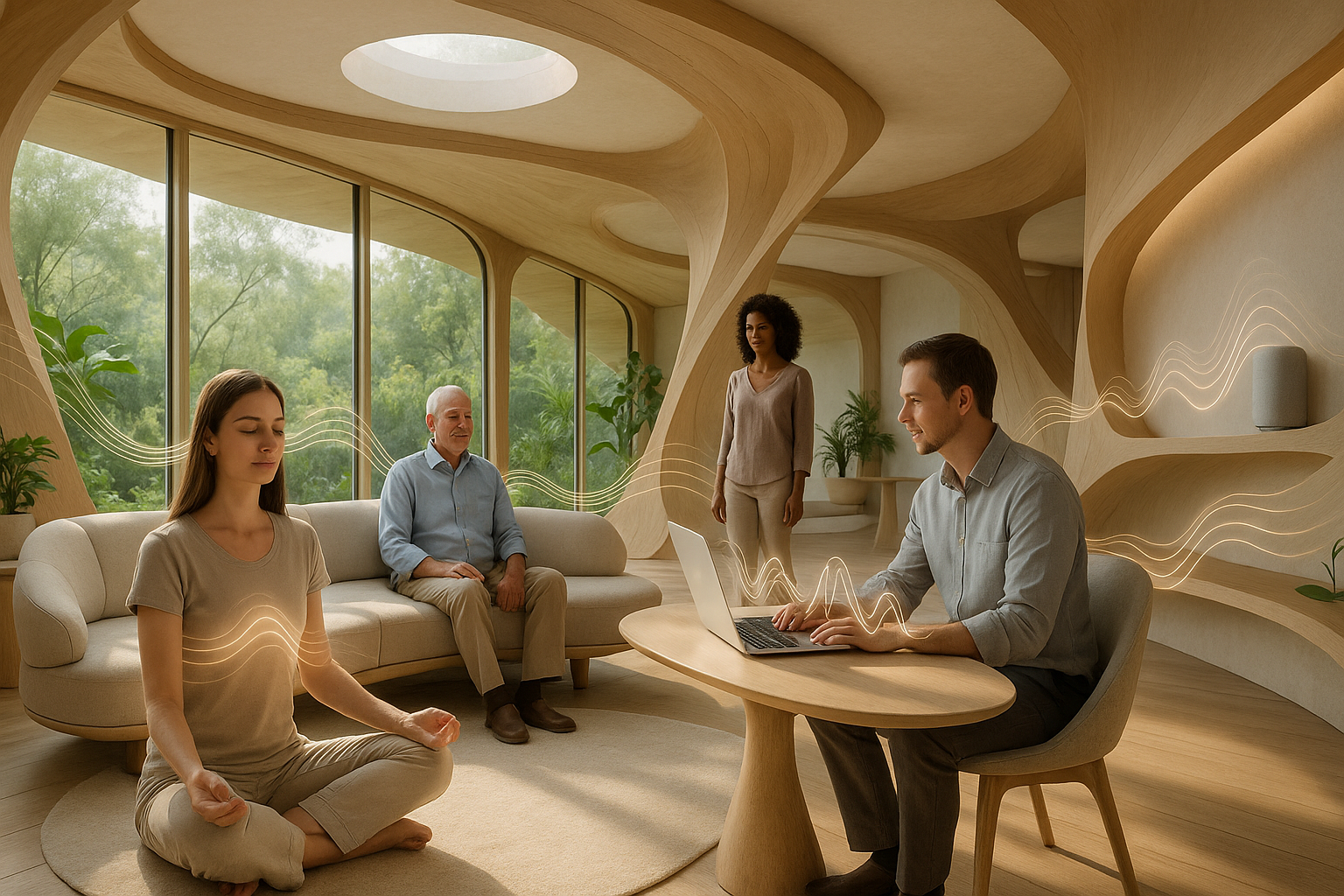
We design and build spaces without fully understanding how they affect us
ARKAION is a framework to understand how built environments impact human health, performance, and environmental systems.
The Built Environment Shapes Human Health
The spaces where we live, work, learn, and heal shape how we feel, think, and perform.
They impact our health, well-being, and the environment through energy, materials, and resources. Yet most design and construction decisions are still driven by cost, aesthetics, timelines, and compliance, not by their impact on people and the planet.
From Design to Performance
The built environment should not be evaluated only by how it looks or how it is delivered. It should be understood by how it performs.
This means considering:
human performance and well-being
environmental conditions
ecological impact
These variables are measurable and increasingly understood. The challenge is not knowledge. It is using that knowledge in a structured way.
The ARKAION Framework
ARKAION integrates standards like WELL with measurable insights from neuroscience and regenerative practices, creating a framework that goes beyond certifications to address human performance and environmental impact.
-
Air quality directly affects how we think, feel, and function. Levels of CO₂, particulates, and ventilation rates influence cognitive performance, fatigue, and respiratory health.
-
Water systems affect hydration, biological function, and long-term health through chemical composition, filtration, and delivery infrastructure.
-
Light regulates circadian rhythm, sleep cycles, hormone production, and cognitive performance through intensity, timing, and spectral composition
-
Temperature, humidity, and airflow influence comfort, stress response, and productivity.
-
Sound levels, frequency, and reverberation influence stress, concentration, and communication.
-
Materials affect indoor air quality and long-term health through emissions, toxicity, and lifecycle impact.
-
Electromagnetic exposure from devices and infrastructure may influence sleep and nervous system response.
-
Layout, density, and spatial proportions affect movement, orientation, and stress levels.
-
Visual complexity, contrast, and composition influence attention, fatigue, and perception.
-
Airborne chemicals and scent influence mood, perception, and physiological response.
-
Movement patterns and physical interaction with space affect health, energy, and long-term physical condition.em description
-
Location, climate, and environmental conditions influence exposure, comfort, and long-term resilience.
-
Social interaction, privacy, and perceived safety influence mental well-being and behavior.
A Framework Designed to Be Applied
The goal is not to introduce another standard, but to make existing knowledge usable. ARKAION brings together the factors that shape human health and environmental impact, ensuring they are considered as a whole rather than in isolation—improving how we design, plan, and build by aligning what we already know.
Key Facts
-

Light Regulates Your Hormones
Exposure to the right light cycles improves sleep, mood, and focus
-

Geometry Influences Your Focus
Proportion and form can enhance clarity or create subtle stress
-

Sound Shapes Your Nervous System
Acoustic balance impacts relaxation, creativity, and communication
-
Temperature Affects Your Energy Levels
Comfort and climate control influence productivity and well-being
-

Visual Cues Impact Emotions
Colors, symbols, and imagery shape how you feel in a space
How it works
Our 3-Step Path to Spatial Harmony
-
Step 1 – Assess
Measure your space across 10 pillars of coherence using photos, scans, and guided inputs. Our intuitive platform walks you through the process.
-
Step 2 – Diagnose
Receive your personalized Coherence Report with scores, insights, and symbolic interpretations.
-
Step 3 – Re-align & Implement
Apply targeted recommendations, supported by ARKAION’s network of vetted experts.