Designing with the Nervous System
Every environment tells a story to the body before the mind has time to interpret it. Walls, light, and sound are not neutral—they whisper signals that the nervous system translates into either safety or stress. Where sustainability and efficiency speak to planetary resources, coherence design asks: How do spaces speak to the body’s most delicate instrument—the nervous system?
The human nervous system is exquisitely sensitive to environmental signals. Light, sound, geometry, and material all modulate autonomic balance. A harshly lit corridor with erratic acoustics can push the body into sympathetic overdrive—raising cortisol, constricting vessels, and triggering vigilance. By contrast, a space with balanced proportions, natural daylight, and resonant acoustics can invite parasympathetic restoration, lowering heart rate, improving digestion, and promoting creative cognition
The tools to measure this impact are now within reach. Heart Rate Variability (HRV), long recognized in medical research as a biomarker of resilience, provides immediate feedback on how environments affect nervous system balance. Similarly, electroencephalography (EEG) reveals brainwave entrainment with ambient rhythms: discordant lighting flicker induces stress, while coherent light cycles synchronize with alpha-theta patterns associated with calm and focus. Spaces, in this sense, act as biofeedback loops
Ancient systems already intuited this relationship. Feng Shui, Vastu Shastra, and sacred architecture across civilizations worked with orientation, proportion, and resonance to support human flourishing. The difference today is the ability to test and validate such principles with measurable data. Neuroscience and physiology provide the bridge between intuition and evidence, enabling designers to ground decisions in human biology
Consider hospitals and schools, where stress modulation has profound consequences. Studies show that patients recover faster in rooms with views of nature, while students perform better in classrooms with daylight access. These outcomes are mediated not just by aesthetics but by neurophysiological coherence. Design, therefore, is not merely cultural—it is clinical

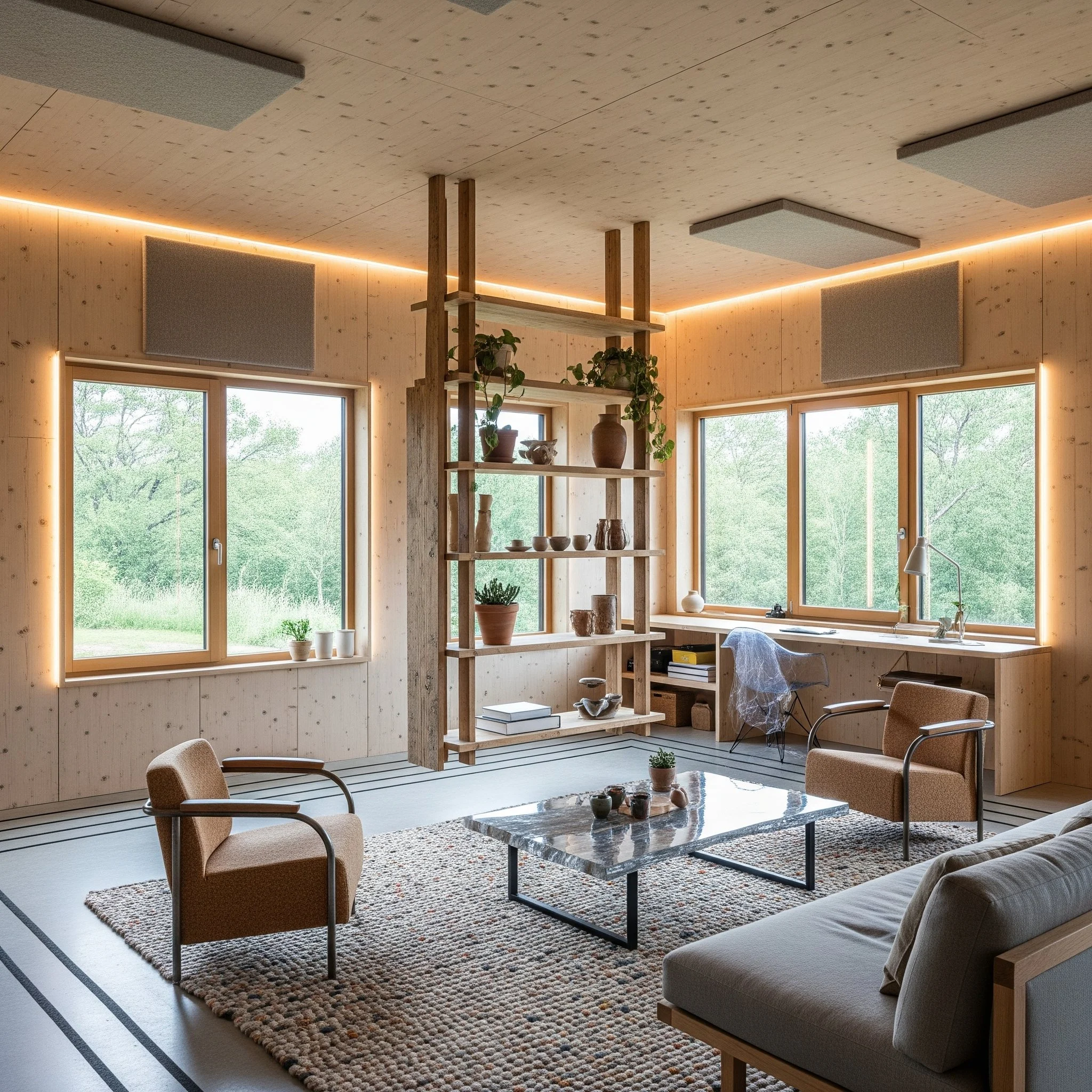
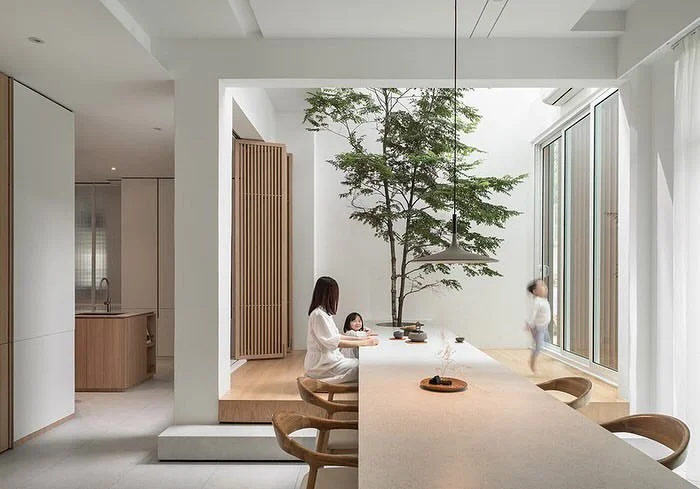
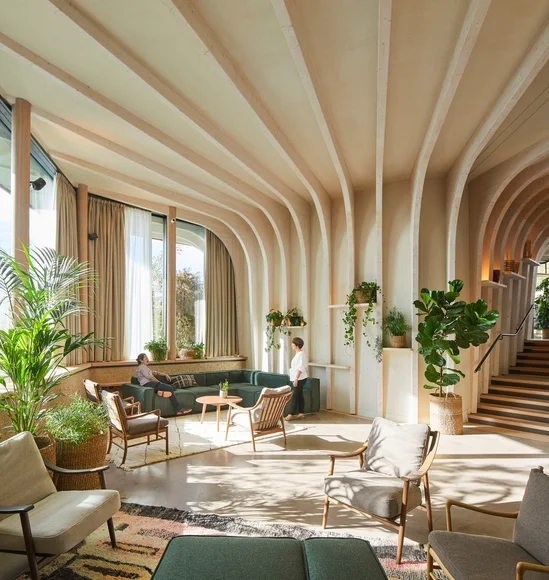





To design with the nervous system is to shift from object-centered metrics (form, style, efficiency) to human-centered resonance (health, cognition, emotional balance). This paradigm reframes architecture as a therapeutic medium: spaces that do not simply shelter but heal, not simply function but entrain.
The next frontier of design lies here: a fusion of ancient wisdom, modern neuroscience, and biometrics. As designers, the invitation is clear—treat each wall, window, and axis not as inert material, but as part of a living dialogue with the body. To design with the nervous system is to honor the most fundamental blueprint of all: life itself.
References:
- Ulrich, R. S. (1984). View through a window may influence recovery from surgery. Science, 224(4647).
- Hameroff, S., & Penrose, R. (2014). Consciousness in the universe: A review of the Orch OR theory. Physics of Life Reviews, 11(1).
- Pallasmaa, J. (1996). The Eyes of the Skin: Architecture and the Senses.
- Grant, R. E. (2024). Codex Universalis Principia Mathematica.
