Feng Shui Was Right (But Now We Can Prove It)
For centuries, traditions such as Feng Shui in China and Vastu Shastra in India emphasized the arrangement of space as essential to wellbeing. To the modern eye, these systems may appear symbolic, cultural, or even mystical. Yet, emerging scientific evidence suggests that their underlying insights were rooted in measurable realities of human perception and physiology. The question we now face is not whether these traditions were meaningful, but how their wisdom can be validated and applied in contemporary design practice.
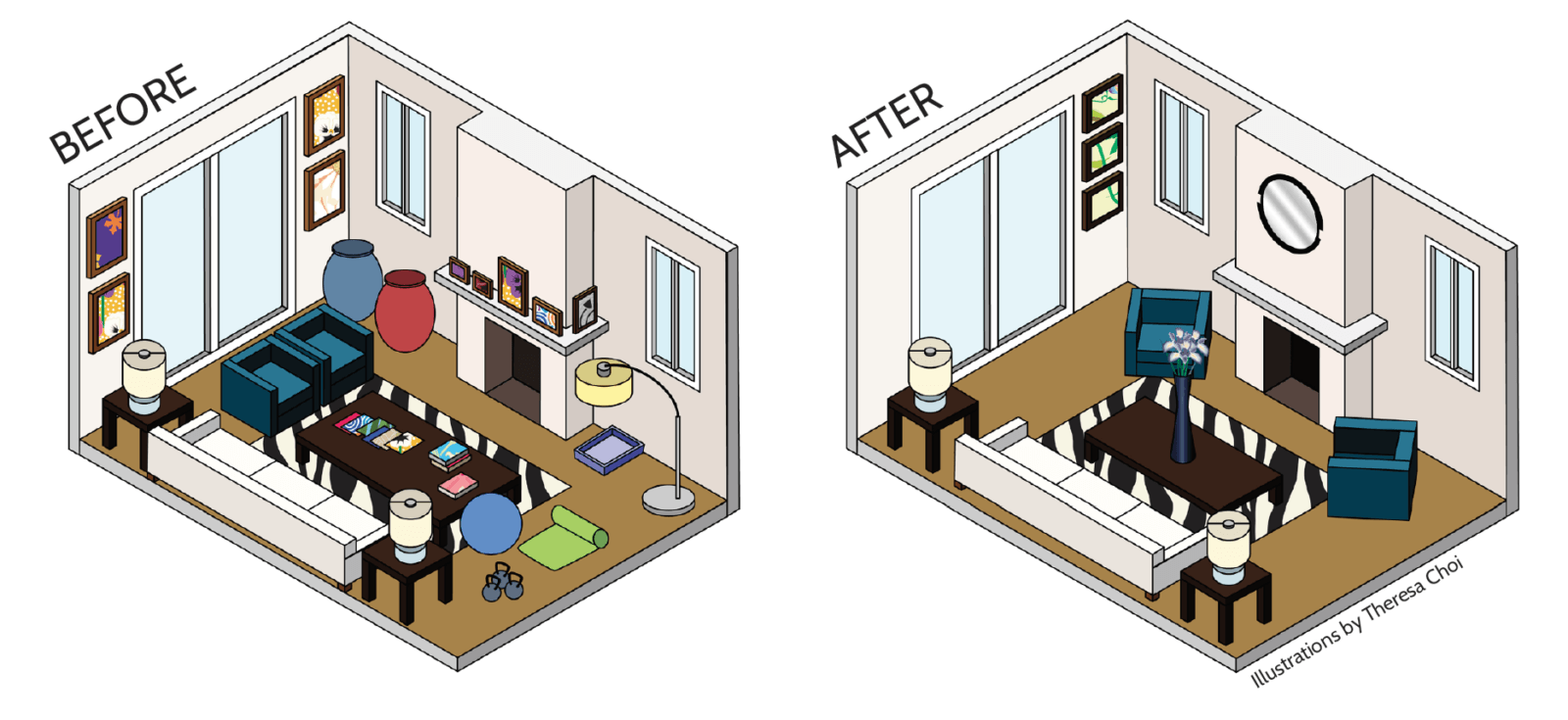
Feng Shui, for instance, emphasizes flow—of energy, light, and circulation. Contemporary neuroscience frames this in terms of sensory processing: clutter, poor orientation, and blocked pathways heighten stress responses, while clear sightlines, balanced proportions, and natural flow reduce cognitive load and stabilize autonomic function. In short, environments designed with spatial harmony support nervous system coherence
The Codex Universalis describes coherence as a state where geometry, resonance, and electricity align to form healthful fields of interaction. While ancient builders spoke of chi or prana, contemporary researchers measure these effects in terms of Heart Rate Variability (HRV), electroencephalography (EEG), and stress biomarkers. When a space is proportioned with symmetry and resonance, occupants experience measurable physiological benefits—lower stress hormones, improved cognitive focus, and enhanced recovery rates.
One example is the orientation of buildings. Ancient wisdom emphasized solar alignment and cardinal direction. Today, we know that circadian rhythm is entrained by natural light cycles, and exposure to misaligned or artificial lighting disrupts sleep, immunity, and mood. Another example is acoustics: temples, pyramids, and cathedrals were designed for resonance. Current studies show that coherent acoustic environments enhance cognitive performance and emotional regulation, while chaotic noise patterns degrade them
The bridge between symbolic and scientific lies not in dismissing tradition, but in decoding it. Where Feng Shui uses the metaphor of the dragon’s breath moving through space, neuroscience observes the regulation of the vagus nerve and breath-mediated HRV. Where Vastu prescribes spatial orientation for health, chronobiology explains light’s role in regulating melatonin. The language differs, but the underlying phenomena align.
Thus, harmonic design is not a novel invention but a contemporary articulation of principles humanity has long intuited. With biofeedback technologies, biometric measurement, and advanced modeling, we are able to validate what ancient builders knew by observation and practice. The future of design may not discard these traditions, but rather reinterpret them as early chapters in a continuum of human-centered architecture.
References:
- Ulrich, R. S. (1984). View through a window may influence recovery from surgery. Science, 224(4647).
- Pallasmaa, J. (1996). The Eyes of the Skin: Architecture and the Senses.
- Grant, R. E. (2024). Codex Universalis Principia Mathematica.
- McTaggart, L. (2001). The Field: The Quest for the Secret Force of the Universe.
