How to Measure the Coherence of a Built Space
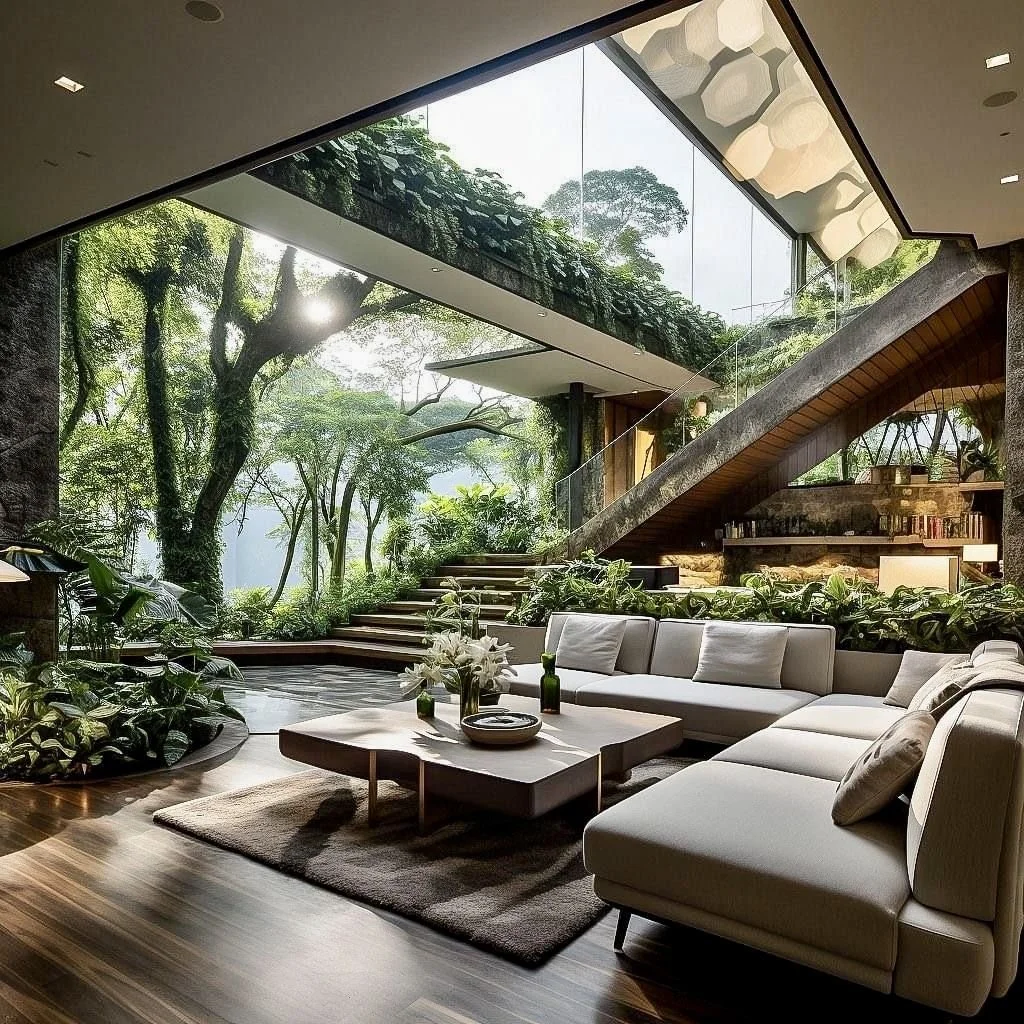
At the intersection of environmental neuroscience, conscious architecture, and biofeedback technology, a key question arises: How can we scientifically validate that a built space is beneficial to human health?
This question drives our mission in Harmonic Design: to transform physical environments into living systems that support biological, emotional, and energetic coherence.
For centuries, architectural design has been guided by aesthetics, functionality, and—in some cases—ancestral intuitions about spatial harmony. Today, however, we have tools that can measure the real impact a space has on the human body and mind. This article outlines the technologies currently available to assess coherence parameters—from heart rate variability to the resonance of organic materials.
Each tool featured has been selected for its scientific validation and direct applicability to conscious design.
Tools for Measuring the Coherence of Built Spaces:
HRV – Heart Rate Variability
What it measures?
HRV tracks the time variation between heartbeats. Neurocardiology research considers it a key indicator of balance between the sympathetic and parasympathetic systems (McCraty & Shaffer, 2015).
Design application:Increased HRV in users exposed to a given environment suggests reduced stress and improved well-being. It helps validate whether a space promotes calm and physiological coherence.
Recommended tools: Oura Ring Gen3 - WHOOP Strap 4.0
BioWell – Human & Environmental Energy Fields
What it measures?
Uses Gas Discharge Visualization (GDV) to capture energy fields around the human body and objects. While its scientific basis remains debated, early studies link it to emotional and physical health states (Korotkov, 2012).
Design application:Allows visual comparison of energetic states before and after architectural or decorative interventions. Particularly useful in therapeutic or high-performance environments.
Recommended tool: Bio-Well 3.0 + Sputnik Sensor
Cymatics – Sound Frequency Visualization
What it measures?
Visualizes how sound frequencies organize matter into geometric patterns. Based on the work of Hans Jenny in the 1960s, cymatics offers a visual language to explore harmonic resonance.
Design application:Useful for analyzing the vibrational interaction of architectural forms, materials, or environmental sounds. Helps create spaces resonating with organizing and harmonious frequencies.
Recommended tool: CymaScope App
EMF Mapping – Electromagnetic Fields
What it measures?Detects intensity and type of electromagnetic fields emitted by electronic devices, wiring, and wireless signals. Related to research on electro-sensitivity and environmental overload.
Design application:Identifies high-exposure zones to redesign them using shielding materials or source relocation. Essential for bedrooms, therapy rooms, and deep-rest areas.
Recommended tool: TriField EMF Meter TF2
EEG – Coherencia Cerebral
What it measures?
Tracks the brain’s electrical patterns. Affordable portable EEGs can estimate states of focus, relaxation, or cognitive dissonance.
Design application:Measures neural activity during exposure to different spaces. Used in neuroarchitecture studies to assess whether a space supports sustained attention or deep relaxation.
Recommended tool: NeuroSky MindWave Mobile 2
Environmental Modulation – Light, Sound, Scent, Temperature
What it measures and regulates?
Automated systems adjust sensory stimuli based on human chronobiology, backed by research on circadian rhythm, thermal comfort, and air quality.
Design application:Enables creation of environments that adapt to time, activity, and user well-being. Ideal for homes, offices, and hospitals seeking to optimize daily experience.
Recommended tools: Dyson Purifier Hot+Cool - Philips Hue Lighting
Plant & Object Resonance
What it measures?Instruments such as laser vibrometry or mmWave sensors detect micro-vibrations in leaves, revealing resonant frequency, hydration, and physiological stress.
Design application:Plants serve as bioindicators. If their frequency improves after a design intervention, it suggests the environment promotes vitality and general homeostasis.
Recommended tools: MotionLeaf (mmWave para hojas) - Laser Doppler Vibrometer (LDV)
Frequency Mapping in Inorganic Materials (Stone, Crystal)
What it measures?Records the natural vibrational frequencies of inert solid materials like stone or crystal using ultrasonic spectroscopy and laser vibrometry.
Design application:Allows comparison of the vibrational coherence of construction materials (e.g., CMU blocks, steel, wood, glass), informing choices that enhance harmonic resonance in space.
Recommended tools: Resonant Ultrasound Spectroscopy (RUS) - Laser Doppler Vibrometer (LDV)
Biogeometry – Energetic Measurement Through Form
What it measures?Biogeometry assesses the "energetic quality" of a space or object via its shape, proportion, and vibrational field. It seeks to detect a specific frequency known as BG3, believed to harmonize biological systems. Though not part of conventional science, it has been applied in urban, educational, and residential projects with documented results.
Design application:Evaluates whether an object, material, or space emits beneficial, neutral, or distorted energy. Through specific forms or corrective modules, it aims to neutralize geopathic stress, EMFs, and environmental strain. Widely used in conscious architectural design.
Recommended tools:
– Lecher Antenna: A calibrated resonance instrument for detecting specific frequencies, including BG3
– Bovis Scale: Radiesthetic measurement of a space or material’s "vital energy"
– Certified Biogeometry Protocols: Taught by Dr. Ibrahim Karim and applied by trained practitioners at biogeometry.comNote: While not recognized by mainstream science as replicable empirical evidence, documented experiences in Switzerland and other regions report measurable improvements in physical and emotional well-being following biogeometry interventions.
Conclusion
These tools represent not only technological innovation but also a philosophical shift—a call to design from a place of biophysical sensitivity. They invite us to create environments that don’t just look good but actively sustain life in all its dimensions. Integrating them into design processes is a step toward a future where architecture, science, and health converge into a new paradigm of inhabiting.
Do you use any of these tools in your design practice? Would you like to co-create spaces evaluated through a truly integrative lens? Reach out and join the movement for measurable, coherent design.
